The Way of the Cross

Word of Jesus’s ministry was spreading throughout Galilee. He sent his twelve disciples out to the towns in the region proclaiming that the Kingdom of God had come and that the King would be coming to visit them. These apostolic heralds were preparing the towns and the villages for the coming of Jesus himself. Upon their return, Jesus demonstrated his power in the Spirit when he fed over five thousand people with little means. Even Herod had heard about Jesus—his teaching and the miracles that accompanied them.
When everything seems to be going better than anyone could have imagined, and Peter himself confesses that Jesus is the Christ, Jesus tells his disciples: “The Son of Man must suffer many things and be rejected by the elders and chief priests and scribes, and be killed, and on the third day be raised” (Luke 9:22). Surely this came as a surprise to his disciples, the same disciples that he had sent out performing miracles and casting out demons preparing his way.
This would be a turning point in Jesus’s earthly ministry. So far, Jesus had ministered to those in the region of Galilee, but now he set his face toward Jerusalem. After declaring that the Kingdom of God had come and that God’s restoration was taking place in front of their very eyes, Jesus begins his way to the cross. On the cross, Jesus would show his disciples and the world the difference between our worldly kingdoms, which seek power and self-preservation, and his eternal Kingdom, which comes to us in humility and truth.
Further, Jesus tells them that his Kingdom will always be rejected by this sinful world, and it must even overcome the sin in our own hearts: And he said to all, “If anyone would come after me, let him deny himself and take up his cross daily and follow me. For whoever would save his life will lose it, but whoever loses his life for my sake will save it. For what does it profit a man if he gains the whole world and loses or forfeits himself? For whoever is ashamed of me and of my words, of him will the Son of Man be ashamed when he comes in his glory and the glory of the Father and of the holy angels. But I tell you truly, there are some standing here who will not taste death until they see the kingdom of God” (Luke 9:23-27). Those who are citizens of Jesus’s Kingdom would be rejected by the world in the same way that the world rejects its true King. Jesus is the only one who could die for the sins of the world, but he is not the only one called to walk the way of the cross. He is our Leader.
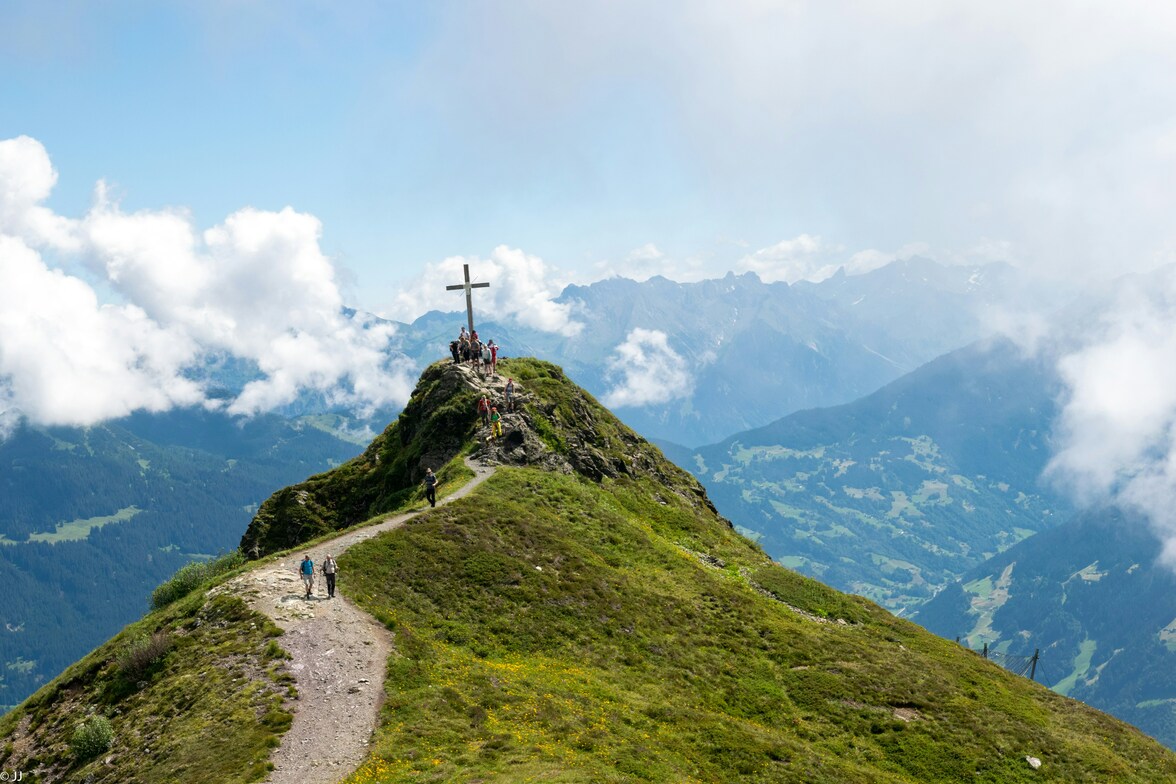
Before beginning the journey to Jerusalem, Jesus leads Peter, James and John up to the top of a mountain to pray. Luke writes, And as he was praying, the appearance of his face was altered, and his clothing became dazzling white. And behold, two men were talking with him, Moses and Elijah, who appeared in glory and spoke of his exodus, which he was about to accomplish at Jerusalem (Luke 9:29-31). Jesus, in all of his glory, spoke with the two great prophets of old concerning his own departure. This is the only place that Luke uses the word “exodus” to describe what would happen in the final days of Jesus’s earthly ministry. This transfiguration of Jesus marks the struggle of Jesus’s royal ministry: glory in the midst of rejection which ends in triumph. Yet, the Father says, “This is my Son, my Chosen One; listen to him!” (Luke 9:35b)
As Christians who follow Jesus, we to are called to listen to him and to go where he leads. We are called to listen in the midst of struggle, in the midst of rejection, in the midst of joy, and in the midst of sadness. No matter what is going on around us, even in moments when it is difficult to see clearly, Jesus’s voice calls us on the way to the cross. Jesus’s glory was revealed right before his journey to pain and struggle, because it would all end in victory. In Jesus, that victory is ours also. That victory gives us strength as we too walk the way of the cross.